


For small and medium-sized enterprises (SMEs) across the United States and Canada, preparing for 2027 means looking beyond tariffs. While trade policy continues to create uncertainty, businesses must also contend with rising operating costs, unpredictable customer demand, delayed payments, inventory commitments and the challenge of accessing the right financing at the right time.
These pressures are closely connected. A supplier price increase can reduce margins, a customer paying late can leave cash tied up in accounts receivable, and a weaker sales forecast can make it harder to plan inventory purchases or meet payroll. Even a profitable business can find itself under pressure when cash arrives later than expenses fall due.
The latest Bank of Canada Business Outlook Survey for the third quarter of 2026 highlights why preparation matters. Although business sentiment improved earlier in the quarter, the Bank reported that conditions had weakened following the breakdown in Canada–US trade talks and the announcement of new tariffs and counter-tariffs. Businesses also reported pressure on export expectations, investment plans and input costs. On the other side of the border, the US Federal Reserve’s 2026 Report on Employer Firms, based on the 2025 Small Business Credit Survey, found that rising costs of goods, services and wages were the most commonly reported financial challenge. More than four in ten participating firms also identified tariff-related cost increases as a financial challenge.
These findings reinforce a practical message for business owners: protecting working capital requires a broader view of risk.
Here are seven cash-flow risks SMEs should prepare for in 2027, along with practical steps to help businesses build greater financial resilience.
1. Rising Input Costs and Margin Compression
Higher costs are not limited to imported goods. SMEs may face increases in raw materials, packaging, transportation, energy, insurance, wages and other essential operating expenses. For Canadian businesses importing from the United States or sourcing internationally, currency movements and trade-related costs can add another layer of uncertainty. US businesses are not immune, particularly when their supply chains depend on foreign components, materials or finished products. The challenge is that costs can rise faster than a business can adjust its selling prices. Passing increases on to customers may protect margins, but it can also make products less competitive or lead buyers to delay orders. Absorbing the increases instead may preserve customer relationships while steadily reducing profitability.
The Federal Reserve’s small business survey illustrates this tension. Among firms reporting foreign inputs, 84% said those inputs had become more expensive between 2024 and 2025. Some businesses passed costs on to customers, while others absorbed at least part of the increase.
How to prepare: Review product and customer profitability regularly rather than relying on historic margins. Model the impact of several cost-increase scenarios, revisit supplier agreements and identify where pricing adjustments may be necessary. Keep a close eye on the difference between accounting profit and cash actually available to run the business.
2. Unpredictable Customer Demand and Longer Sales Cycles
A business can have a strong pipeline and still experience a cash shortfall if customers postpone purchasing decisions, reduce order sizes or take longer to approve contracts. Economic uncertainty can encourage buyers to delay discretionary spending, while larger customers may become more cautious about committing to inventory or capital projects. This can affect manufacturers, wholesalers, distributors and service providers on both sides of the border. For businesses selling into multiple sectors, the risk may be uneven. One customer group might continue ordering consistently while another cuts spending sharply. Companies that rely heavily on a small number of large customers can be particularly exposed to a single delayed or cancelled contract.
How to prepare: Build rolling cash-flow forecasts using conservative, expected and optimistic sales scenarios. Track sales conversion rates, order cancellations and changes in customer purchasing patterns. Consider diversifying across customers, industries and geographic markets where practical.
When forecasting, avoid treating every opportunity in the sales pipeline as guaranteed revenue. Plan around realistic order dates and collection periods, and establish in advance what spending could be deferred if demand weakens.
3. Late Payments and Growing Accounts Receivable
Even when sales remain healthy, slow-paying customers can place considerable pressure on working capital. A business may need to pay employees, suppliers, rent and freight costs weeks before a customer settles an invoice. When several large invoices become overdue at once, the resulting gap can leave little room for unexpected expenses or new opportunities. This is especially relevant to SMEs supplying larger organisations, which may have longer payment terms and formal invoice approval processes. Cross-border transactions can introduce additional administrative steps, documentation requirements and currency considerations. The result is a familiar but often overlooked problem: revenue recorded on the books does not necessarily mean cash is available in the bank.
How to prepare: Establish clear payment terms, perform appropriate customer credit checks and invoice promptly. Monitor receivables ageing reports and follow up on overdue accounts before they become seriously delinquent. Where possible, agree on payment milestones for larger projects rather than waiting until the entire job is complete.
Businesses experiencing persistent gaps between invoicing and collection may also consider invoice factoring. Depending on the facility and the eligibility of their receivables, factoring can provide access to working capital tied up in unpaid invoices, helping bridge the period between delivery and customer payment.
4. Inventory Build-Ups and Supply Chain Disruption
Inventory can be one of an SME’s largest uses of working capital. Businesses often need to pay suppliers before goods arrive, while revenue may not be collected until weeks or months after products are sold. In 2027, uncertainty around trade conditions may encourage some businesses to bring purchases forward, diversify suppliers or hold additional safety stock. These decisions can improve resilience, but they also tie up cash that might otherwise be available for payroll, operating expenses or other opportunities. The risk is not simply having too much stock. It is having the wrong stock, purchasing it at the wrong time or being unable to turn it into cash quickly enough. A manufacturer may invest in materials for a large order only to discover that the customer has delayed delivery. A distributor might purchase additional inventory to protect against supply disruptions, then find that demand is weaker than expected. In both cases, cash is committed before the business knows when it will be recovered.
How to prepare: Review stock turnover, sales forecasts, supplier lead times and minimum order quantities. Identify slow-moving inventory and establish clear approval processes for significant purchasing commitments. Consider whether alternative suppliers can provide greater flexibility without creating excessive costs.
For businesses with substantial inventory requirements, asset-based lending may be worth exploring. Depending on the lender’s criteria and the assets involved, eligible inventory and accounts receivable can form part of the borrowing base supporting a facility. This may help businesses access working capital while continuing to fulfil customer orders.
5. Customer Concentration and Supply Chain Dependency
Many SMEs build successful businesses around a handful of major customers or suppliers. While these relationships can provide reliable revenue and purchasing power, they can also create significant financial exposure. If a major customer reduces its orders, requests extended payment terms or experiences financial difficulties, the impact on an SME can be immediate. The business may lose a substantial portion of its expected cash inflows while remaining committed to payroll, premises, equipment and supplier payments.
Supplier concentration creates a different but equally serious risk. If a key supplier raises prices, experiences disruption or changes its credit terms, an SME may need to find alternative sources at short notice, often at a higher cost. Cross-border businesses can face additional complications when their commercial relationships depend heavily on one market or trade route.
How to prepare: Measure how much revenue comes from your largest customers and establish internal thresholds for concentration risk. Monitor the financial health and payment behaviour of key customers, and maintain regular communication with strategic suppliers.
Where feasible, diversify customer relationships and supply sources over time. Review contracts for minimum purchasing commitments, cancellation provisions and payment obligations that could leave the business exposed if conditions change.
It is also important to understand how lenders assess concentration. A business with strong overall sales may still face financing constraints if a large proportion of its receivables is owed by a single customer. Discussing these factors with a funding partner early can help identify potential limitations before additional working capital is needed.
6. Financing Gaps and the Cost of Capital
Access to financing is another risk SMEs should address before cash becomes critically tight. Businesses may need additional capital to purchase inventory, fulfil new contracts, cover seasonal expenses or bridge the gap between delivering goods and receiving payment. Yet a traditional loan or credit line may not always match the timing or scale of those requirements.
Rapid growth can create particular difficulties. A company may be increasing sales but also accumulating more receivables, purchasing larger quantities of stock and taking on additional operating costs. Its financing needs may therefore rise even when the underlying business is performing well.
The US Federal Reserve’s 2026 Small Business Credit Survey also highlighted financing challenges, including the experiences of firms seeking funding through different types of lenders. Businesses need to consider not only whether funding is available, but also its total cost, repayment structure and suitability for their cash-flow cycle. Canadian SMEs face similar considerations. The Business Development Bank of Canada emphasises the importance of cash-flow projections and understanding the timing of business inflows and outflows.
How to prepare: Assess financing requirements well before a shortfall becomes urgent. Compare the cost, availability, flexibility and repayment requirements of different facilities, and understand any collateral, reporting or covenant obligations.
Options may include a conventional business loan, a revolving credit facility, invoice factoring, asset-based lending or purchase order finance. Each serves different needs and has different eligibility requirements. For example, invoice factoring may be appropriate for a business with eligible receivables and creditworthy customers, while purchase order finance may help an eligible business meet the upfront costs of fulfilling a qualifying order. Asset-based lending may suit businesses with a suitable base of receivables, inventory or other eligible assets. The key is to match the facility to the underlying requirement rather than choosing financing solely on the basis of its headline rate.
7. Unexpected Expenses and Insufficient Cash Reserves
Even businesses with careful budgets can encounter unexpected costs. Equipment failures, emergency repairs, insurance increases, freight surcharges, customer disputes and unplanned staffing requirements can all create pressure on available cash. The challenge is greater when several risks occur at once. A business already dealing with higher supplier costs may have limited capacity to absorb a major repair or a delayed customer payment. Without adequate reserves or access to suitable financing, management may be forced to postpone important purchases, delay expansion or divert funds away from essential activities.
How to prepare: Establish a contingency plan based on the business’s operating requirements and exposure to risk. Rather than relying on a generic reserve target, calculate how much cash is needed to cover essential expenses during a realistic disruption. Review the forecast regularly and test scenarios such as a major customer paying 30 days late, a 10% increase in key input costs or an unexpected reduction in sales. Identify which expenses can be deferred, which obligations must be met and what funding options could be available. Where possible, arrange appropriate financing facilities before they are urgently needed. Having a clear view of available liquidity can help management respond more calmly when circumstances change.
Building a More Resilient Cash-Flow Strategy for 2027
Preparing for 2027 does not mean assuming the worst. It means understanding where cash-flow pressures could arise and putting measures in place before they become urgent. For SMEs in both the US and Canada, a practical starting point is to review the business’s financial position across five areas:
Forecast cash flow: Maintain a rolling forecast that accounts for realistic sales, payment dates, operating costs and debt obligations.
Protect margins: Review pricing, supplier terms and customer profitability regularly, especially when input costs are changing.
Strengthen receivables management: Invoice promptly, monitor overdue accounts and understand the effect of customer payment terms on available working capital.
Review funding options: Consider whether existing facilities are suitable for the business’s current size, trading patterns and growth plans.
Plan for disruption: Identify key customer, supplier and operational dependencies, then establish contingency plans for the most significant risks.
Businesses should also pay attention to reliable economic indicators. The Bank of Canada’s Business Outlook Survey provides useful insight into Canadian firms’ expectations for sales, investment, costs and inflation. US businesses can follow the Federal Reserve’s Small Business Credit Survey for evidence on financing conditions and the challenges facing smaller firms.
For additional context on how trade uncertainty affects working capital, visit our previous article, How the US–Canada Trade War Is Impacting SME Cash Flow.
Ultimately, resilience comes from combining sound financial planning with the ability to respond when circumstances change. Businesses that understand their cash-conversion cycle, anticipate funding requirements and maintain access to appropriate financing are better positioned to manage uncertainty without losing sight of their long-term objectives.
How Sallyport Commercial Finance Can Help
Cash-flow challenges do not always indicate a struggling business. For many SMEs, they arise because growth, customer payment terms and operating expenses do not move in sync. Sallyport Commercial Finance works with businesses across North America to provide flexible funding solutions, including accounts receivable factoring, asset-based lending, inventory finance and purchase order finance. Depending on the business’s circumstances and facility eligibility, these solutions can help release working capital, support customer orders and provide additional financial flexibility. For businesses planning for 2027, reviewing funding options early can help clarify what resources may be available as trading conditions evolve.
At Sallyport, we’re committed to backing resilient entrepreneurs with flexible funding solutions that help businesses navigate uncertainty, manage cash flow and pursue their next stage of growth. Reach out to our dedicated team today!
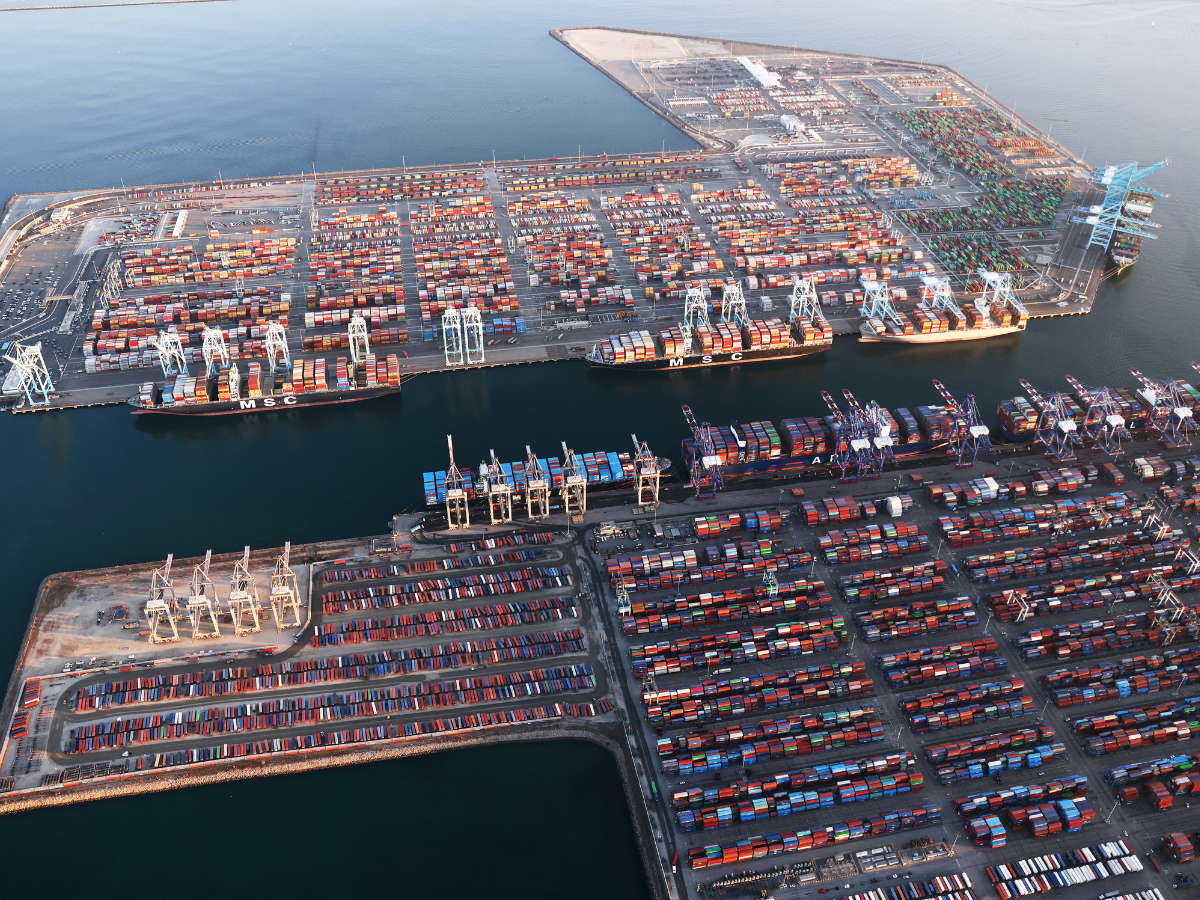
Port Slowdown Signals Trouble for U.S. Businesses
Recent data from the Port of Los Angeles shows a dramatic 30% drop in shipments in early May, following the…

Is US Manufacturing the Route to Economic Recovery?
There’s a big sea change underway in US manufacturing, the start of which predates the significant economic and political events…

American Business Women’s Day
Sallyport Commercial Finance Celebrates American Business Women’s Day

The Most Financial Time of the Year
Sallyport commercial finance’s Annual Holiday Music Video!