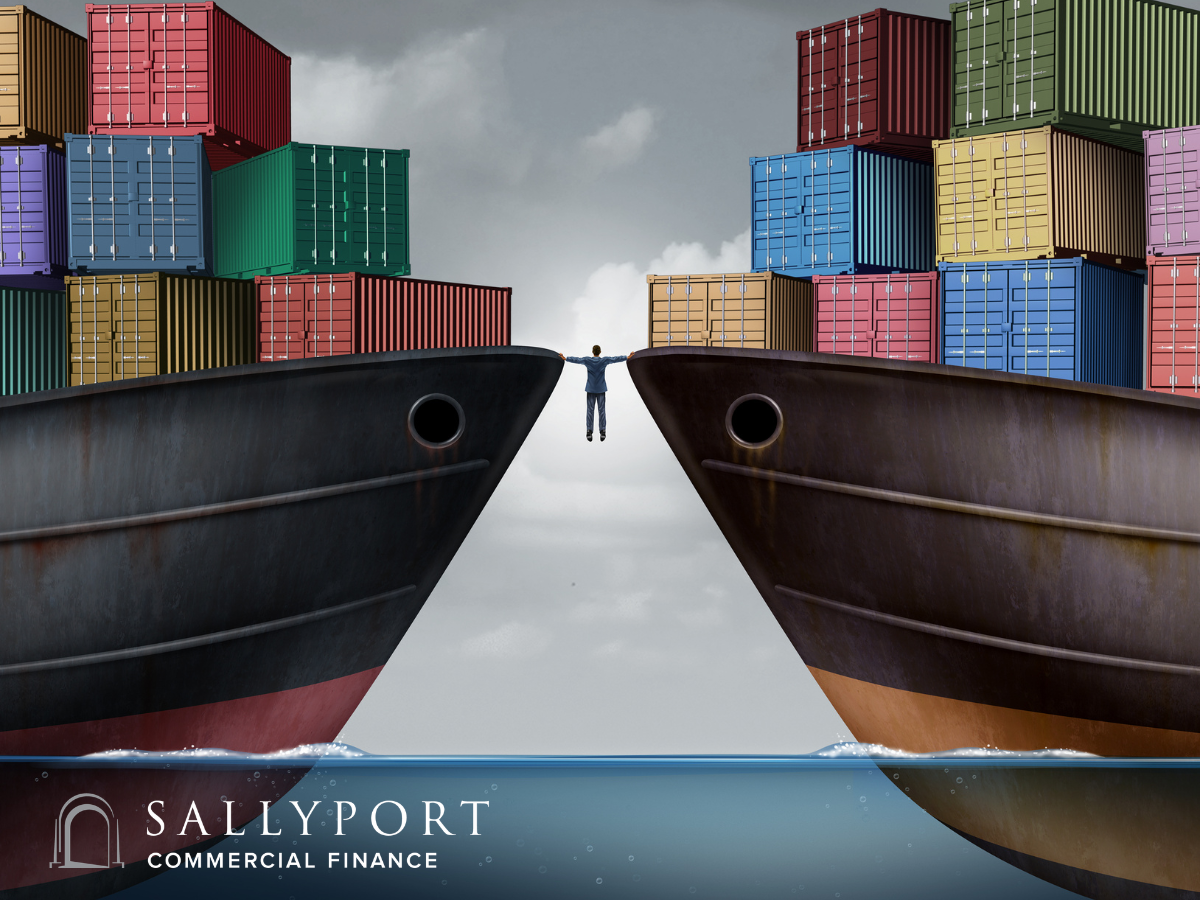
For decades, the US and Canada have operated one of the world’s most integrated trading relationships. Businesses on both sides of the border have built supply chains, customer bases and operating models around relatively predictable cross-border commerce.
Today, that predictability is being tested.
As tariffs, counter-tariffs, changing trade measures and continued uncertainty reshape the North American trading environment, small and mid-sized businesses are facing a challenge that goes well beyond the cost of individual imports or exports. For many SMEs, the bigger issue is cash flow.
When tariffs increase the cost of goods, businesses may need to commit more money to inventory. When customers delay orders or push back on pricing, receivables can take longer to collect. When supply chains change, companies may need to source from new suppliers, carry additional inventory or pay higher transportation costs. In other words, trade uncertainty can turn a profitable business into a cash-constrained business surprisingly quickly.
The current environment is particularly significant because of the scale of US–Canada trade. According to the U.S. Trade Representative’s Canada trade profile, total US goods trade with Canada was approximately $715.5 billion in 2025.
That means even businesses that don’t directly import or export across the border can feel the effects of changing trade conditions through customers, suppliers and interconnected North American supply chains.For SMEs, understanding the impact on working capital and preparing for continued uncertainty, could be just as important as understanding the tariffs themselves.
The Trade Environment Is Changing Quickly
The US–Canada trading relationship has entered a period of considerably greater uncertainty.
In August 2026, the United States imposed a 50% tariff on approximately $20 billion of Canadian goods following the breakdown of trade negotiations. Canada subsequently announced counter-tariffs on selected US products, with measures covering approximately $27.6 billion of imports from the United States. Not every product moving between the two countries is affected in the same way. Tariff rates, exemptions, product classifications and trade-agreement rules can vary significantly depending on the goods involved. The Canadian government maintains an official list of products subject to Canadian counter-tariffs, including applicable tariff items and rates. For business owners, however, the challenge isn’t simply determining whether a particular product is subject to a tariff, it’s understanding what that additional cost means for the entire cash conversion cycle.
Why Tariffs Can Create a Cash Flow Problem
A tariff is an additional cost, but its impact can extend well beyond the initial transaction. Consider a Canadian distributor that imports $500,000 of products from the United States. If the cost of those products increases because of tariffs or other trade-related measures, the business may need to invest significantly more cash to purchase the same amount of inventory. That creates a simple problem:
More cash goes out before the same amount of revenue comes in.
If the company sells that inventory to customers on 30, 60- or 90-day payment terms, the business may have to finance the increased cost for weeks or months before receiving payment. This creates additional pressure on working capital.
The same issue can occur in reverse for US companies purchasing Canadian goods. A manufacturer importing components from Canada may face higher landed costs, while a Canadian exporter selling into the United States may find that customers are becoming more price-sensitive.
Either way, the business may need additional liquidity to bridge the gap.
The Working Capital Ripple Effect
Trade disruption rarely affects just one line on an income statement. Instead, it can create a ripple effect throughout the balance sheet.
1. Higher Inventory Costs
Businesses may need to spend more to purchase the same inventory. If a company normally carries $1 million of inventory but the cost of replenishing that inventory rises by 10%, an additional $100,000 may suddenly be required simply to maintain existing stock levels. For a business operating with limited cash reserves, that difference can be substantial.
2. Longer Cash Conversion Cycles
Higher costs can also affect how quickly inventory converts into cash. If customers resist price increases, businesses may have to offer discounts, extend payment terms or hold inventory for longer. That means cash remains tied up for longer. A company can therefore experience strong revenue growth while simultaneously experiencing increasing pressure on available cash.
3. Margin Compression
Businesses don’t always have the ability to pass the full cost of tariffs on to customers. A supplier may increase prices, but the SME’s customers may refuse to accept the full increase; the result can be margin compression.
For example, if a product previously generated a 20% gross margin and tariff-related costs reduce that margin to 14%, the business may need significantly more revenue to generate the same gross profit dollars. This can make growth considerably more expensive to finance.
4. Increased Supplier Deposits
Trade uncertainty can also change supplier behavior. Suppliers dealing with volatile costs or uncertain demand may request larger deposits, shorter payment terms or payment in advance. For SMEs, that can create an immediate cash requirement. A business that previously had 60 days to pay a supplier may suddenly need to fund a significant portion of an order upfront.
5. Higher Transportation and Logistics Costs
Businesses adjusting their supply chains may also encounter increased freight, warehousing, customs and logistics costs. Switching suppliers isn’t always as simple as finding another company that sells the same product. A new supplier may be located farther away, have different minimum order quantities or require longer lead times. All of these factors can increase the amount of working capital tied up in the supply chain.
Trade Uncertainty Can Be as Difficult as the Tariff Itself
One of the biggest challenges facing SMEs is that businesses are being asked to make financial decisions without always knowing what the trade environment will look like several months from now.
That uncertainty can make planning difficult.
Should a company:
- Buy additional inventory before prices increase?
- Find a new supplier?
- Continue expanding into the US?
- Raise prices?
- Absorb some of the additional costs?
- Delay capital investment?
- Increase its cash reserves?
There is no universal answer. The right decision depends on the company’s industry, customers, products, margins and exposure to cross-border trade. Canada’s latest State of Trade report notes that Canadian goods trade with the United States declined in 2025 amid tariffs and trade-policy uncertainty, while exports to non-US markets increased. The report also identifies geopolitical shocks and downside risks as important factors shaping the 2026 outlook.
For SMEs, this reinforces an important point: flexibility has financial value.
How US Businesses Can Be Affected
Although much of the discussion around the current trade environment focuses on Canadian exporters, US SMEs can also experience significant effects. Many American businesses depend on Canadian suppliers, customers or components. A US manufacturer may purchase Canadian raw materials. A distributor may rely on Canadian products. A transportation company may move goods across the border every day. Even when a business isn’t directly subject to a tariff, its customers or suppliers may be.
That means US SMEs should consider their indirect exposure to Canadian trade.
- Business owners should be asking:
- How much of our inventory originates in Canada?
- Do any key components cross the border?
- How dependent are we on Canadian customers?
- Could a supplier’s costs increase?
- Are our customers likely to delay purchasing decisions?
- Could exchange-rate movements affect margins?
- Do we have alternative suppliers?
Understanding these dependencies can help businesses identify cash flow risks before they become urgent.
How Canadian SMEs Can Be Affected
Canadian SMEs may face an even broader range of challenges because of the importance of the US market to Canadian businesses. An exporter can potentially face higher costs, reduced competitiveness, customer uncertainty and longer sales cycles simultaneously. A US customer that previously purchased $1 million of products from a Canadian supplier may reconsider that relationship if the landed cost of those products rises significantly.
The Canadian business then faces a difficult choice: reduce its price, absorb the cost or risk losing the customer. None of those options is ideal and this is why maintaining sufficient liquidity is so important.
A company with strong working capital has more room to negotiate, adjust its supply chain and explore new markets. A company operating with minimal liquidity may be forced to make decisions based purely on immediate cash requirements.
Protecting Cash Flow During Trade Uncertainty
There are several practical steps SMEs can take to strengthen their financial position.
Review Your Customer and Supplier Concentration
Identify where your greatest exposure lies. If a significant percentage of revenue comes from one market, or if a large portion of inventory comes from one country, you may have a concentration risk. Diversification doesn’t necessarily mean immediately abandoning existing relationships, but developing alternatives.
A business could begin identifying secondary suppliers, exploring new customers or testing additional markets before those alternatives become urgently necessary.
Revisit Your Pricing Strategy
If costs have increased, review whether your current pricing remains sustainable. Don’t look only at the tariff itself.
Consider the total landed cost of the product, including:
- Purchase price
- Duties and tariffs
- Freight
- Insurance
- Customs and brokerage
- Warehousing
- Currency fluctuations
- Financing costs
A product that appears profitable based on its original purchase price may have a very different margin once all additional costs are included.
Monitor Accounts Receivable Closely
When businesses face uncertainty, collecting outstanding invoices becomes even more important. Review your accounts receivable aging regularly and identify customers who are consistently paying beyond agreed terms. A growing sales ledger may look positive, but if customers are taking longer to pay, cash flow can deteriorate quickly. For SMEs, the ability to turn receivables into usable working capital can provide valuable flexibility.
Build a Cash Flow Forecast
A detailed cash flow forecast can help business owners identify potential pressure points before they happen. Rather than simply projecting revenue and expenses, consider multiple scenarios. For example:
Base case: Current tariffs and costs remain broadly unchanged.
Pressure case: Input costs increase and customers take longer to pay.
Growth case: Sales increase significantly but require additional inventory and staffing.
Looking at several scenarios can help management understand how much liquidity may be required.
Financing Working Capital During Uncertainty
One of the challenges of traditional business financing is that funding may not always increase at the same pace as a company’s sales. An SME may have a $2 million revolving line of credit, for example, but suddenly need significantly more working capital because sales are increasing and customers are taking longer to pay. This is where asset-based and receivables-based financing can play an important role.
Accounts Receivable Financing
Accounts receivable financing allows businesses to access working capital tied up in eligible outstanding invoices. Instead of waiting for customers to pay according to their normal payment terms, a business can unlock a significant portion of the value of those receivables and use the funds for ongoing operations.
For companies dealing with trade-related uncertainty, that liquidity can help fund:
- Inventory purchases
- Payroll
- Supplier payments
- Freight and logistics
- New customer orders
- Expansion into alternative markets
Most importantly, financing can help businesses avoid allowing a temporary cash flow gap to dictate long-term strategic decisions.
Asset-Based Lending
For businesses with substantial accounts receivable, inventory, equipment or other eligible assets, asset-based lending can provide a broader working capital solution. This can be particularly relevant for companies whose financing requirements have grown alongside their balance sheet. Instead of viewing growth as a reason to restrict borrowing, asset-based financing can potentially allow available capital to grow with the assets supporting the facility.
Don’t Let Uncertainty Stop Strategic Growth
It may be tempting for SMEs to put every expansion plan on hold until the trade environment becomes clearer. But uncertainty doesn’t necessarily mean businesses should stop growing. In some cases, the current environment is creating opportunities. Businesses may discover new domestic suppliers. Manufacturers may invest in additional North American production. Distributors may identify underserved markets. Companies that have historically relied heavily on one country may accelerate diversification. The businesses best positioned to take advantage of these opportunities are likely to be those with sufficient financial flexibility to act. That means the objective shouldn’t necessarily be to eliminate risk – it should be to manage risk while preserving options.
Building a More Resilient North American Business
The current US–Canada trade environment is a reminder that SMEs cannot always control the external factors affecting their businesses. They cannot determine government policy, dictate tariff rates or control geopolitical developments. What they can control is how prepared they are to respond.
A resilient business is one that understands its supply chain, monitors its margins, maintains strong relationships with customers and suppliers and has access to sufficient working capital. That last point is particularly important, cash gives businesses choices. It allows them to purchase inventory when necessary, pay suppliers on time, retain employees, invest in new opportunities and adapt when market conditions change. Without sufficient liquidity, even a strong business can find itself reacting rather than planning.
What SMEs Should Be Watching Next
As trade negotiations and tariff measures continue to evolve, business owners should monitor several key areas:
Tariff changes: Product-specific tariff rates and exemptions can change the economics of cross-border transactions.
Customer behavior: Watch for changes in order volumes, payment terms and purchasing patterns.
Supplier costs: Monitor whether suppliers are passing increased costs through the supply chain.
Inventory levels: Avoid both excessive inventory and shortages as businesses adjust to changing sourcing conditions.
Currency movements: Changes in the Canadian dollar can affect the economics of cross-border purchasing and sales.
Government support: Both Canadian and US governments may introduce programs designed to support businesses and industries affected by trade measures.
Canadian businesses can consult the Government of Canada’s official resources for current information on tariff measures and available support for affected businesses.
For businesses involved in US–Canada trade, the Office of the United States Trade Representative is also an authoritative source for information about the USMCA and the North American trade framework.
The Bottom Line: Cash Flow Creates Flexibility
Trade tensions may eventually ease. Tariffs may change. Supply chains may adjust. New trade agreements may emerge. But for SMEs, the immediate challenge is managing the period of uncertainty in between. The businesses that navigate this environment successfully won’t necessarily be those with the lowest costs or the largest revenues; they will often be the businesses with the financial flexibility to adapt. Strong cash flow can give an SME the ability to absorb higher costs without immediately sacrificing margins, maintain inventory without draining reserves, continue paying employees and suppliers, and pursue new opportunities while competitors are forced to pull back.
For companies trading across the US–Canada border, working capital therefore becomes more than an accounting consideration. It becomes a strategic tool.
At Sallyport Commercial Finance, we work with North American SMEs to provide flexible working capital solutions designed around the realities of growing businesses.
From accounts receivable financing to asset-based lending and inventory financing, the right funding structure can help businesses unlock working capital, manage cash flow and respond to opportunities, even when the economic environment is unpredictable.
Trade uncertainty may be outside your control but having the financial flexibility to respond doesn’t have to be; reach out to our team today and stay ahead of a tumultuous economy.

Financing a Professional Services Business
We often regard professional services businesses as being easier to manage than a product based business and in a lot…

Changes to SBA 7(a) Loan Fees – What you Need to Know
The U.S. Small Business Administration (SBA) has recently completed its annual review of the fees that it charges lenders under…

AG Machining Client Testimonial
AG Machining Client Testimonial