


When the 90-day tariff pause expired on July 9, new duties rolled out – bringing a sharp 35% levy on certain Canadian imports, along with heavy tariffs on other countries’ goods. The impact is rippling across logistics chains, pricing strategies, currencies and financing needs.
Tariffs Hit Home at the Ports
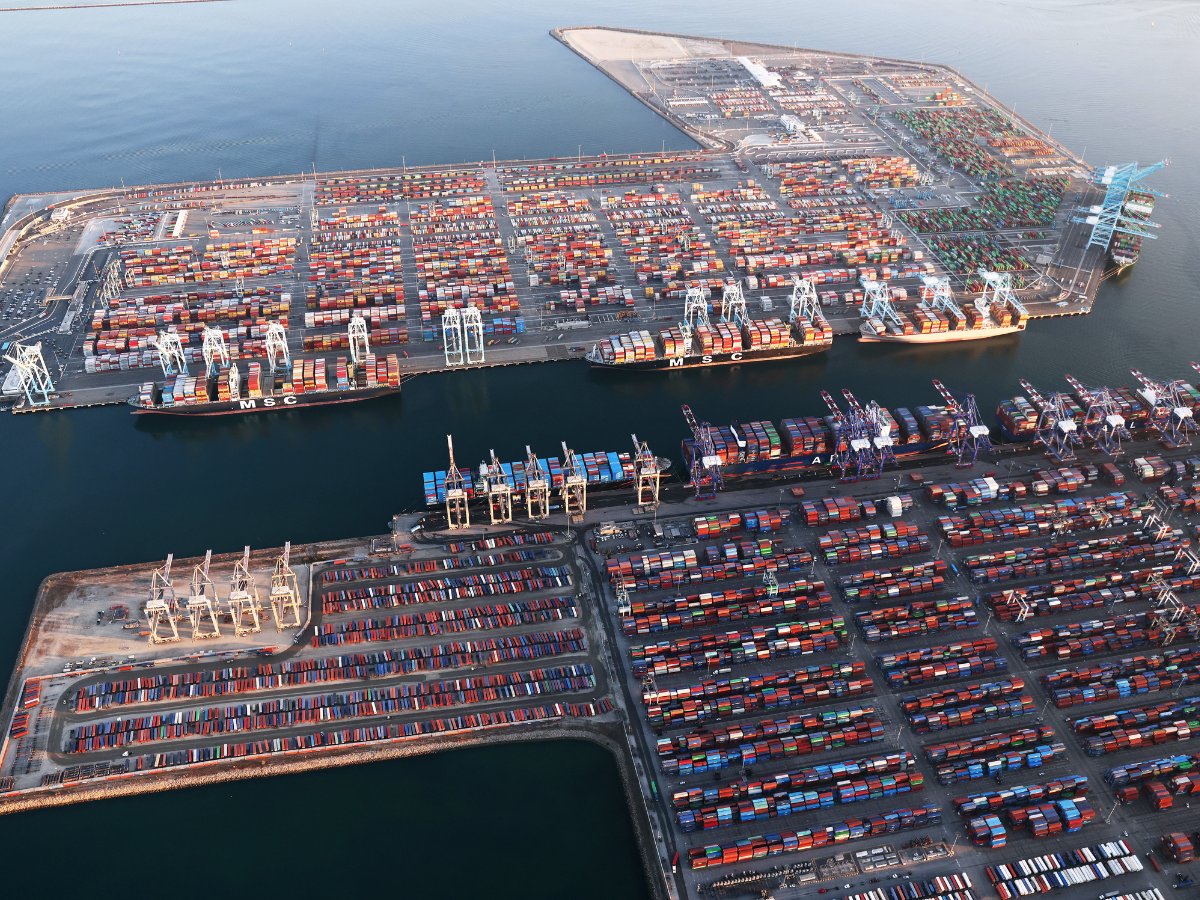
Before the deadline, importers rushed shipments and Port of Los Angeles volumes hit record highs in June. But volumes are expected to slow through Q3 and Q4 as tariffs bite. Businesses that stocked up now may face inventory crunches later this year.
Price Pressures & Market Volatility
Rising input costs are already showing up in consumer inflation, with June CPI jumping 0.3%. That, in turn, rattled equities and U.S. indexes dipped after tariff news. Higher costs and tighter margins mean businesses must rethink pricing, supply sources, and potential financial stress.
Canada Takes a Bigger Hit
Canada is projected to experience a 2.1% GDP decline under these tariffs compared to the U.S.’s 0.4%. With banks flagging higher credit risk in trade-dependent sectors, Canadian businesses face growing challenges in securing traditional financing.
Shifting Supply Chains North of the Border
Canadian exporters are pivoting away from U.S. markets, shopping for customers in the U.K., EU and beyond. But even with increased diversification, most sectors still struggle to offset the losses from U.S. trade barriers. A weaker loonie helps exporters but hurts importers.
What It Means for Working Capital
- Cash Flow Crunches – Higher costs and longer collections create funding gaps.
Sourcing Swaps – Companies must explore new suppliers or bring operations closer to home. - Lender Hesitation – Some banks are retreating from trade-exposed sectors.
- Funding Innovation – That’s where Sallyport’s flexible, cross-border solutions step in to help companies navigate volatile market conditions.
- Near-shoring of Finance – Many U.S. banks are reluctant or simply can’t lend to businesses in Canada or those with foreign ownership wanting to grow in North America – this will become more prevalent.
What You Should Be Doing Now as a Business Owner
- Build resilience: Secure A/R and inventory credit lines.
- Stress-test your P&L: Model various tariff cost scenarios.
- Review procurement: Identify alternative suppliers and inventory buffers.
- Plan for FX changes: Use hedging if you’re dealing in CAD/USD markets.
- Partner wisely: Consider lenders who understand cross-border dynamics.
Why It Matters – and How Sallyport Can Help
Tariffs aren’t just policymaking, they’re a wake-up call for supply chain health, pricing power, and financial agility. With so much disruption, businesses need funding partners that don’t stand back when volatility hits.
At Sallyport, we bridge cross-border exposure, customize working capital, and support companies in trade-sensitive industries, from agriculture to manufacturing, helping them adapt and grow amid change.
If you’re feeling the pressure from trade uncertainty or watching your operations tighten under new tariffs, reach out. We’re ready to help you stay ahead of change and fuel your growth with confidence.
A Complete Synopsis of Trade Tariff Landscape since Deadline Passed
🌐 1. The 90‑Day Tariff Pause Ends – New Levies Begin
- On July 9, the temporary 90‑day pause on U.S. “reciprocal tariffs” for Canada, Mexico, EU, and others expired.
- As of August 1, new tariffs come into effect meaning:
- 35% on certain Canadian imports not covered by USMCA;
- 19% on Indonesian goods, 20% on Vietnam, and a massive 50% on Brazilian products .
These moves mark an intensification from the earlier “Liberation Day” tariffs (34%, 84%, even up to 125–145% on China), signaling a much more aggressive posture on trade.
📉 2. Immediate Market Reaction & Inflation Surge
- PORTS RUSH: In June, the Port of Los Angeles handled a record 892,340 TEUs (Twenty Foot Equivalent Units) as businesses pushed imports ahead of the deadline. But projected downturns follow, freight volumes are expected to fall during the calendar year for Q3‑Q4 as tariffs bite.
- PRICE IMPACT: Rising input costs are now feeding into Consumer Price Index figures – a 0.3% Month-on-Month jump in June CPI, potentially upwards of 2.7% Year-on-Year.
- STOCK VOLATILITY: U.S. equities stumbled post‑tariff announcements (35% on Canada) with S&P slipping 0.3% and the Dow falling over 200 points.
🇨🇦 3. Canada’s Recession Risk & Trade Retaliation
- ECONOMIC HIT: A Yale Budget Lab report forecasts a 2.1% GDP loss in Canada, versus 0.4% in the U.S. if tariffs are maintained, eequating to a $2,500 loss in median U.S. household income.
- BANK WORRIES: The Bank of Canada flags increased credit risk for trade-dependent loans, with up to 15% of bank assets tied to vulnerable sectors.
- TARIFF EXCHANGES: Canada retaliated with 25% on U.S. spirits (resulting in a 65% sales decline) and prepared a 35% retaliatory tariff on many U.S. imports effective from August 1st.
🔄 4. Supply Chain Disruptions & North American Ripples
- DISRUPTED LOGISTICS: Tariffs hamper access to key materials – steel, auto parts, lumber, used extensively across many varied industries .
- EXPORT SHIFTS: Canadian firms are pivoting to markets like the UK, EU, Australia, with exports to non-U.S. nations jumping from 22% to 32%, but this fails to offset a CA$7.7 billion U.S. export loss.
- CURRENCY BUFFER: The loonie weakened ~6% vs USD helping exporters but hurting Canadian importers.
💼 5. Business Finance: Tightening Conditions & Adaptation
- CASH FLOW PRESSURES: U.S. and Canadian firms now face higher input costs and tighter margins, raising demand for working capital, Accounts Receivable financing and inventory lines.
- BANK EVASION: Some banks may shrink lending into tariff-affected sectors – much like how Sallyport steps in with cross-border and flexible funding capabilities.
- ADAPTATION REQUIRED: Businesses are re-evaluating procurement, seeking alternative suppliers and passing costs to customers or re-shoring inventory.
📊 6. Outlook: Ongoing Talks & Financing Opportunities
- NEGOTIATIONS CONTINUE: Canada targets a tariff truce by July 21, but while some USMCA-covered goods remain exempt (~38%), uncertainty lingers.
- INFLATION RISKS: Tariff-driven inflationary costs could pressure the Fed – but Federal Reserve signals might remain steady, with potential rate cuts later in the year.
- FINANCING NEEDS RISING: As businesses contend with inventory squeeze, delayed receivables and substitute sourcing, financing partners who offer agility (like Sallyport) will be essential.
🧭 What U.S. & Canadian Firms Should Consider
| Focus Area | Key Actions |
| Cash Buffer | Secure A/R, inventory, and ABL facilities to offset margin pressure. |
| Cost Forecasting | Model tariff scenarios—assess 10%‑35% cost hits across SKUs and input types. |
| Supply Chain Review | Identify alternative suppliers; mitigate risk of disruption. |
| Currency Strategy | Monitor FX; use hedging to manage CAD/USD volatility (with weakened loonie). |
| Strategic Finance | Engage flexible lenders; structure cross-border funding for end-to-end support. |

Oil Field Services Providers Under Pressure
The oil field services sector encompasses a wide-ranging variety of businesses that provide the products and services necessary in the…
Port Slowdown Signals Trouble for U.S. Businesses
Recent data from the Port of Los Angeles shows a dramatic 30% drop in shipments in early May, following the…
AG Machining Client Testimonial
AG Machining Client Testimonial